- Images (2)
- Links (0)
- Agenda (0)
|
|
|
|
|
|
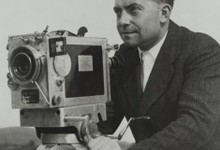
Charles Dekeukeleire (1905–1971) was a Belgian filmmaker, critic, and writer. Henri Storck described him as "the great precursor and inventor of cinematic art in Belgium," as he was the first to develop significant creative activity in Belgian cinema.
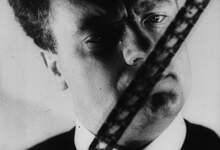
Between 1927 and 1929, he directed three avant-garde films—Combat de boxe, Impatience and Histoires de détective—which, though underappreciated, made an essential contribution to the history of experimental cinema. As an avant-garde cinephile, Dekeukeleire was deeply influenced by the work and theories of Jean Epstein and Louis Delluc. He was also familiar with the formal, rhythmic, and kinetic experiments of visual artists like Man Ray, Fernand Léger, and Marcel Duchamp. A member of the 7 Arts group and magazine—where architects, painters, musicians, and poets embraced constructivism—he fully aligned with the principles of "pure cinema," rejecting literary and narrative conventions in favor of poetic emotion drawn from the language of film itself.
He later turned to documentary filmmaking, dedicating himself to this genre until 1962 and producing nearly 100 films, often on commission and covering a wide range of subjects.
Alongside his filmmaking career, Dekeukeleire worked as a film critic for specialized journals and served as the Belgian correspondent (1932–1933) for France-Actualités, edited by Germaine Dulac. He also authored several books, including Réforme du cinéma (Cinema Reform, with Paul Werrie and Willem Rombauts, 1932), L’Émotion sociale (Social Emotion, 1942), and Le Cinéma et la pensée (Cinema and Thought, 1947), and contributed to Belgian public television.
|
THÈMES D'INSPIRATION
1938 / 35mm / b&w / sound / single screen / 9' 00 / 45 € distribution: DCP on server or Digital file on server |
|
HET KWADE OOG
1937 / 35mm / b&w / sound / single screen / 76' 00 / 261 € distribution: DCP on server or Digital file on server |
|
HISTOIRE DE DÉTECTIVE
1929 / 35mm / b&w / silent / single screen / 50' 52 / 187 € distribution: DCP on server or Digital file on server |

|
IMPATIENCE
1928 / 35mm / b&w / silent / single screen / 36' 20 / 145 € distribution: DCP on server or Digital file on server |
|
COMBAT DE BOXE
1927 / 35mm / b&w / silent / single screen / 7' 30 / 43 € distribution: DCP on server or Digital file on server |