- Images (11)
- Links (0)
- Agenda (0)
|
|
|
|
|
|
|
|
|
|
|
|
|
|
|
|
|
|
|
|
|
|
|
|
|
|
|
|
|
|
|
|
|
|
by Ernst MOERMAN
new filmmaker
1937 / 35mm / b&w / silent / 1 screen / 19' 00 |
"All those who can recall the adventures of the famous bandit retain them like the memory of a dream – what remains is an epic that feels more unreal than incoherent. Yet, those who do remember will find in this film a profoundly poetic absurdity of a story pushed beyond the limits of plausibility, whose images will transport them, for half an hour, to another world " – Ernst Moerman (La Gazette, 8 September 1937)
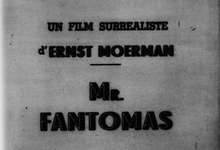
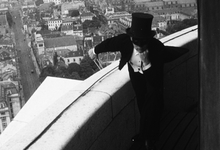
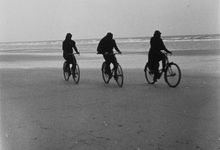
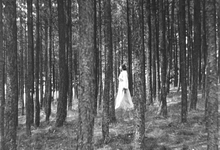
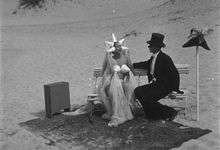
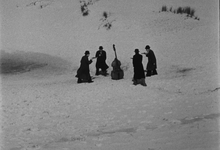
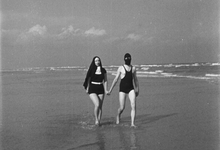
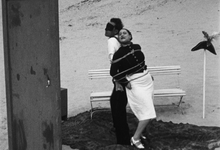
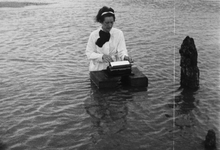
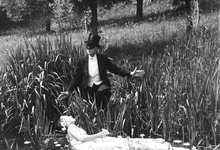
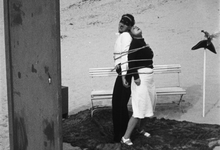
Deeply inspired by his reading of the 35-volume Fantômas series by Souvestre and Allain, Ernst Moerman (1887/1897 – 1944), Belgian poet, made his only film in 1937, Monsieur Fantômas. Described as the “280,000th chapter” in the adventures of his hero, the film shows him committing crimes and attacking public morals. Rich in references to the Surrealist movement, Moerman incorporates Paul Eluard (Capital of Pain (1926)), evokes Magritte's motifs – which can be seen at the end of the film – but also mad love, dreamlike imagery, fierce anti-clericalism and the call for subversion.
“Through this recreated world, I sought to establish a form of communication. It is ruled by a supernatural reality in which each object, once made visible, discovers its true illumination. Freed from the layers of habit accumulated over centuries, the surrounding objects are suddenly confronted with this renewed reality. In this vital light, they finally cease to be invisible, allowing their previously unrecognized beauty to be revealed to us,” he said in 1937. Along with Henri d'Ursel, Charles Dekeukeleire and Henri Storck, Ernst Moerman formed the first avant-garde generation of Belgian cinema, which also represented the most exciting productions of this era in Belgium.
“Everything is light-hearted and lovely in this film, with intertitles few in number but nevertheless worthy of Tzara or Breton: : Remove your mask, it's dark in here.” – Dominique Païni
“Monsieur Fantômas was screened on the same programme as Buñuel’s Un Chien andalou, which seems a good choice as both films have elements in common. First of all, they are both consciously immoral acts of savagery, partly sadistic, partly intellectual satires, with religion and love as their two main objects of attack. It is self-evident that both of them can be described as furiously anticlerical – Buñuel and Moerman were well-known for their virulent, lifelong anti-clericalism.” – Santiago Rubín de Celis
Ernst Moerman’s Monsieur Fantomas (1937) has been restored in 2024 by the Royal Belgian Film Archive – CINEMATEK with the support of the Fédération Wallonie-Bruxelles. The works have been carried out based on the original 35mm negative kept in the Royal Belgian Film Archive collections, where the film has been digitised in 2K.
Restored in 2024 by the Royal Film Archive of Belgium (CINEMATEK) with funding from the European Union – NextGeneration EU and with the support of the Wallonia-Brussels Federation. The restoration was carried out using the original 35mm negative held in CINEMATEK’s collections, where the film was digitized in 2K.
| distribution format | DCP on server (SMPTE 2K) |
|---|---|
| screen | 1,33 (single screen) |
| speed | 24 fps |
| sound | sound |
| rental fee | 84,00 € |
| distribution format | Digital file on server (FHD) |
|---|---|
| screen | 1,33 (single screen) |
| speed | 24 fps |
| sound | sound |
| rental fee | 84,00 € |